
How Automation Is Transforming Automotive Manufacturing Lines
industrial automation solutions provider
automotive automation | smart manufacturing | automotive production systems
Automotive manufacturing has always been driven by precision, scale, and speed. However, the industry is undergoing a major transformation as manufacturers adopt advanced automotive automation technologies across production lines. From robotic welding and automated material handling to intelligent quality inspection systems, automation is reshaping how vehicles are designed, assembled, and delivered to market. Modern automotive plants rely on connected smart manufacturing environments that coordinate machines, data, and processes to achieve higher efficiency and consistent production output.
For Plant Managers, Manufacturing Engineers, and Operations Leaders, the shift toward automation is no longer optional. Competitive pressure, rising production complexity, and the demand for high product quality require manufacturing systems that operate with speed, accuracy, and reliability. Within modern automotive production systems, automation connects robots, conveyors, sensors, and control systems into a synchronized production ecosystem that reduces manual intervention while improving process consistency.
As an automation solutions provider, AIP supports automotive manufacturers by implementing scalable industrial automation systems that optimize production workflows. By combining robotics, smart control architecture, and data-driven manufacturing systems, AIP helps automotive plants increase productivity, maintain quality standards, and adapt to evolving production demands.
Key Takeaways
✓ Understand how automation improves automotive production efficiency
✓ Learn how robotics increases precision and consistency
✓ Discover how smart manufacturing improves production visibility
✓ Explore scalable automation strategies for automotive plants
✓ Improve long-term flexibility in automotive manufacturing lines
Table of Contents
1.Evolution of Automotive Manufacturing
Automotive manufacturing has evolved significantly over the past century. Traditional production lines relied heavily on manual labor and mechanical systems, where operators performed repetitive assembly tasks and quality checks. While these methods supported mass production, they often created challenges related to consistency, speed, and operational efficiency.
Modern automotive manufacturing lines are increasingly powered by automotive automation technologies that connect machines, robots, sensors, and digital control systems. These technologies enable synchronized operations where each stage of production communicates with the next. Within modern automotive production systems, automated processes ensure consistent timing, accurate part placement, and efficient coordination between assembly stages.
Automation also supports the transition toward smart manufacturing, where data-driven systems help manufacturers maintain high production standards while managing complex vehicle designs, multiple variants, and strict quality requirements. As vehicle technology becomes more advanced, automation provides the operational stability needed to support modern manufacturing demands.
Vision systems enhance OEE by providing continuous monitoring and automated verification of packaging processes. These systems capture real-time visual data, analyze product characteristics, and immediately detect deviations from defined quality standards. By identifying issues early and enabling corrective action without manual intervention, machine vision strengthens operational reliability and supports sustained production efficiency.
2.Robotics in Automotive Assembly Lines
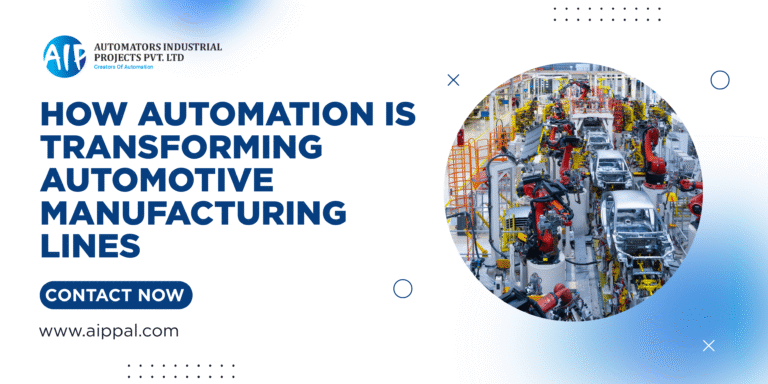
Industrial robots are central to modern automotive production. Robotic systems perform tasks such as welding, painting, component installation, and material handling with high precision and repeatability. Unlike manual operations, robotic systems maintain consistent performance across long production cycles, reducing variability and improving product quality.
In automotive assembly lines, robotic automation ensures precise positioning of components, accurate welding points, and uniform application of coatings. These capabilities significantly reduce defects and improve production efficiency. Robots also operate continuously, allowing production lines to run at higher speeds without compromising accuracy.
When properly integrated into industrial automation systems, robotic cells become coordinated production units that work alongside conveyors, sensors, and PLC controllers to maintain stable manufacturing workflows.
3.Improving Production Speed and Efficiency
Automation enables automotive manufacturers to significantly increase production speed while maintaining consistent output quality. Automated assembly systems reduce cycle times by performing tasks faster and more accurately than manual operations.
Production lines benefit from:
- Continuous machine operation
• Reduced manual handling delays
• Faster part positioning and installation
• Synchronized production flow
Automated production lines also reduce downtime by minimizing human errors and improving equipment coordination. With well-designed industrial automation systems, automotive plants achieve stable production output and predictable cycle performance
4.Enhancing Quality Through Automated Inspection
Quality control is critical in automotive manufacturing. Even small defects in components or assembly processes can affect vehicle performance and safety. Automated inspection technologies help manufacturers detect issues early in the production process.
Vision systems and automated inspection tools monitor production lines to identify defects, verify part alignment, and ensure assembly accuracy. These systems operate continuously and provide real-time feedback to production control systems.
Automated inspection improves:
- Product quality consistency
• Defect detection accuracy
• Production traceability
• Process reliability
By identifying issues immediately, manufacturers can reduce rework, prevent faulty products from reaching customers, and maintain strict quality standards.
5.Smart Material Handling and Logistics
Efficient material flow is essential for maintaining automotive production speed. Automation plays a key role in optimizing how parts move through manufacturing lines.
Automated material handling systems include conveyors, robotic transport systems, automated guided vehicles (AGVs), and storage automation solutions. These systems move components between production stations quickly and reliably.
Benefits of automated material handling include:
- Reduced manual transportation
• Improved production flow
• Lower risk of component damage
• Faster inventory movement
By connecting material handling systems with production control software, manufacturers ensure that parts arrive at the correct location at the right time, preventing delays in assembly operations.
6.Data-Driven Manufacturing Operations
Modern automotive automation systems generate large volumes of production data. When integrated into manufacturing management systems, this data provides valuable insights into production performance.
Data-driven manufacturing enables visibility into:
- Production cycle times
• Equipment utilization
• Quality trends
• Downtime patterns
With access to real-time operational data, plant managers can identify inefficiencies, optimize processes, and improve production planning. Data analytics also support predictive maintenance strategies that help prevent unexpected equipment failures.
7.Flexible Production for Multiple Vehicle Models
Automotive manufacturers often produce multiple vehicle models on the same production line. Automation systems must therefore support flexible production configurations that allow rapid changeovers.
Flexible automation enables:
- Quick product changeover
• Reconfigurable robotic programs
• Modular production cells
• Adaptation to design updates
This flexibility allows manufacturers to introduce new vehicle models without completely redesigning production infrastructure. As automotive markets evolve, flexible automation systems support faster innovation and reduced time-to-market
8.Improving Worker Safety Through Automation
Automation not only improves efficiency but also enhances worker safety in automotive manufacturing environments. Many production tasks involve heavy components, repetitive motions, or hazardous operations such as welding and painting.
Automated systems reduce worker exposure to these risks by performing dangerous or physically demanding tasks. Safety sensors, protective barriers, and collaborative robotic technologies further improve workplace safety.
By combining automation with intelligent safety systems, manufacturers create safer working environments while maintaining high production productivity.
9.How AIP Supports Automotive Automation
AIP helps automotive manufacturers design and implement advanced automation solutions tailored to real production environments. The company focuses on integrating robotics, control systems, and digital manufacturing technologies into unified industrial automation frameworks.
AIP’s automation approach includes:
- Production workflow analysis
• Scalable automation architecture
• Robotic system integration
• Data-connected manufacturing systems
These solutions enable automotive plants to achieve higher productivity, improved quality control, and better operational visibility.
10.Business Impact of Automotive Automation
When automation is properly implemented across automotive manufacturing lines, organizations experience measurable operational improvements.
These include:
- Higher production throughput
• Reduced manufacturing defects
• Faster production cycles
• Lower operational costs
• Improved manufacturing flexibility
Automation transforms production lines into highly efficient systems that support consistent vehicle manufacturing while maintaining quality and reliability.
11.Industry Use Cases
Automotive Assembly Plants
• Robotic welding systems
• Automated component installation
• Consistent assembly accuracy
Automotive Component Manufacturing
• Precision machining automation
• Automated quality inspection
• High-volume production lines
Electric Vehicle Manufacturing
• Battery assembly automation
• High-precision component handling
• Advanced quality verification systems
OEM Manufacturing Facilities
• Integrated production automation
• Flexible vehicle assembly lines
• Scalable manufacturing infrastructure
Across automotive sectors, automation enables manufacturers to achieve reliable production performance while adapting to evolving vehicle technologies.
12.Building the Future Automotive Factory
Automotive manufacturers planning automation initiatives should evaluate several important factors.
- Whether production processes are suitable for automation
• Whether system architecture supports scalability
• Whether production data is accessible for analysis
• Whether robotics integration is aligned with production workflows
• Whether safety systems support efficient operation
Future automotive factories will be built around connected automation environments where machines, software, and data work together to support efficient manufacturing operations.
Final Thoughts
Automation is transforming automotive manufacturing lines by enabling faster production, improved quality control, and more efficient operations. As vehicle designs become more complex and production demands continue to grow, industrial automation will remain a key driver of manufacturing innovation.
However, successful automation requires more than installing advanced machines. It requires careful integration of robotics, control systems, data platforms, and production workflows.
When automation strategies are designed thoughtfully, automotive manufacturers gain scalable production systems that support long-term operational success.
FAQs
1. Why is automation important in automotive manufacturing?
Automation improves production efficiency, reduces manufacturing defects, and ensures consistent assembly quality across large production volumes.
2. How do robots improve automotive production lines?
Robots perform tasks such as welding, painting, and component installation with high precision and repeatability, reducing production variability.
3. How does data integration support automotive automation?
Data integration provides visibility into production performance, enabling manufacturers to monitor efficiency, detect issues early, and optimize operations.
4. How does industrial automation support future automotive manufacturing?
Industrial automation enables scalable, flexible production systems that allow manufacturers to adapt quickly to new vehicle technologies and changing market demands.