
How Vision Based Inspection Systems Reduce Rejection Rates in High-Speed Manufacturing
industrial automation solutions provider
industrial automation | machine vision | smart manufacturing
Modern manufacturing lines run at extremely high speeds where even a minor defect can quickly lead to large-scale losses. Traditional inspection methods often fail to keep pace, allowing defective products to pass through or causing unnecessary rejections.
This is where Vision Based Inspection Systems become essential. These systems use industrial cameras, intelligent image processing, and automation integration to inspect products in real time without slowing production. As a trusted industrial automation solutions provider, AIP helps manufacturers implement smart inspection systems that reduce rejection rates, improve consistency, and strengthen overall process control.
Key Takeaways
✓ Real-time defect detection at production speed
✓ Lower scrap and reduced false rejections
✓ Consistent inspection across all shifts
✓ Inspection data supports root cause analysis
✓ AI-based automation improves long-term quality performance
Table of Contents
1.Why Rejection Rates Are a Major Manufacturing Challenge
High rejection rates trigger a costly chain reaction inside a manufacturing facility. Each rejected product is not just a single loss — it represents wasted raw materials, additional machine runtime, increased labor involvement, and higher overall energy consumption. Over time, these hidden losses accumulate and directly impact profitability. Rework processes further compound the issue by consuming valuable production time, disrupting schedules, and lowering overall equipment efficiency. Instead of producing new sellable output, resources are diverted toward fixing preventable defects that could have been identified earlier through advanced Vision Based Inspection Systems
Frequent rejections also create operational instability. Production planning becomes difficult, delivery timelines get affected, and workforce productivity declines as teams spend more time troubleshooting quality problems rather than focusing on output. Equipment wear and tear can increase due to repeated processing cycles, leading to higher maintenance costs and unexpected downtime. Implementing reliable Vision Based Inspection Systems helps detect defects instantly, reducing the need for repeated handling and minimizing unnecessary strain on machinery.
In highly regulated industries such as pharmaceuticals and food processing, the risks extend far beyond operational losses. Poor product quality can lead to compliance violations, regulatory penalties, damaged brand reputation, and even large-scale product recalls. By using advanced Vision-Based Inspection Systems, manufacturers can ensure strict quality checks, maintain traceability, and consistently meet regulatory standards.
Modern Vision Based Inspection Systems help manufacturers address these challenges by enabling real-time inspection and intelligent quality monitoring. By detecting defects at the earliest stages of production, problems are contained before they escalate into large-scale failures. This proactive approach reduces waste, protects compliance, improves efficiency, and ensures consistent product quality across the entire manufacturing process
2.Limits of Manual Inspection in High-Speed Production
Manual inspection relies heavily on human attention, concentration, and personal judgment. However, maintaining the same level of focus throughout long production shifts is extremely difficult. As fatigue sets in, even experienced operators can overlook small but critical micro-defects. This becomes even more challenging when products move at high speeds on conveyor lines, leaving very little time for careful visual checks. In addition, differences in individual skill levels, experience, and decision-making approaches often lead to inconsistent inspection results across shifts or teams.
To overcome these limitations, many industries are steadily moving toward automation. Machine vision systems offer stable, accurate, and repeatable inspection processes that do not suffer from fatigue or subjective judgment. They can detect even the smallest defects at high speeds with consistent precision. By removing human variability from fast-paced production environments, vision systems improve quality control, reduce rejection rates, and ensure more reliable manufacturing outcomes.
3.What Is a Vision-Based Inspection System?
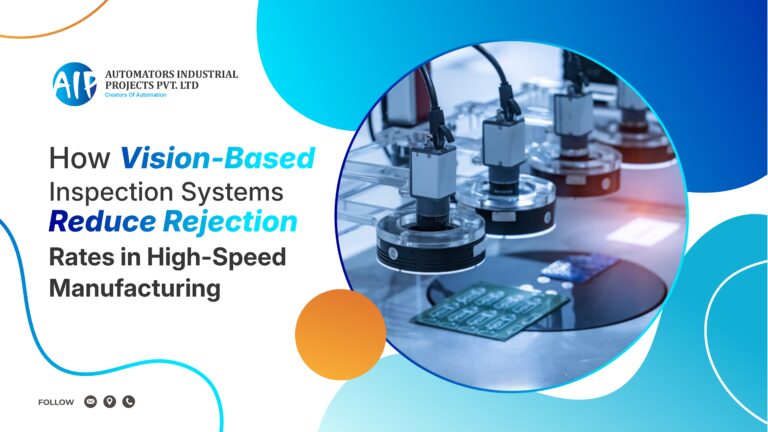
A Vision Based Inspection Systems is built by combining high-resolution industrial cameras, precisely controlled lighting, powerful image-processing software, and seamless integration with automation equipment. Each of these components plays a critical role in capturing clear images and analyzing them accurately. During production, every product is scanned and evaluated in just milliseconds, comparing it against pre-defined quality standards and specifications. This enables real-time decision-making without slowing down the manufacturing process.
These systems are capable of identifying a wide range of defects that are difficult to detect reliably with the human eye. They can spot surface scratches, dimensional variations, missing or misaligned components, incorrect label placement, printing defects, barcode errors, and sealing issues in packaging. Because the inspection criteria are digitally defined, the process becomes highly precise, measurable, and repeatable. The result is consistent quality control, reduced human error, and better overall product reliability
4.Detecting Defects at the Source
One of the biggest advantages of vision inspection systems is their ability to detect problems at a very early stage in the production process. Rather than discovering defects only during final checks or after products reach customers, issues are identified instantly at the exact point where they occur. This real-time monitoring helps manufacturers maintain better control over quality throughout the entire production cycle.
Early detection enables faster corrective action, allowing teams to adjust machines, recalibrate processes, or fix material issues before defects spread further down the line. Faulty products can be automatically separated, preventing them from mixing with good output. This greatly reduces the risk of large batch failures, rework costs, and material wastage. With strong automation expertise, AIP supports manufacturers in building smart systems that react immediately to quality deviations, ensuring consistent performance and higher production reliability.
5.Maintaining Consistent Quality Standards
Vision Based Inspection Systems operate with the same programmed rules and parameters at all times, whether it is the first shift of the day or late-night production. Unlike human operators, machines do not experience fatigue, loss of concentration, or distractions. This means inspection performance remains stable and reliable 24/7, regardless of workload or shift timing. As a result, manufacturers can maintain consistent product quality throughout the entire production schedule.
Because the inspection criteria are digitally defined and applied uniformly, there is far less room for subjective judgment. This helps reduce disagreements between quality control and production teams, as decisions are based on measurable data rather than individual opinions. Uniform standards create transparency in the inspection process and build confidence across departments that quality evaluations are fair, accurate, and objective.
6.Reducing False Rejections and Improving Yield
In manual inspection processes, it’s common for perfectly good products to be rejected simply because inspection standards vary from person to person. When operators try to be extra cautious, they may apply overly strict judgments, leading to unnecessary rejections and increased scrap. This not only wastes materials but also affects production efficiency and overall costs — a challenge that Vision Based Inspection Systems are specifically designed to eliminate.
Vision Based Inspection Systems solve this issue by using clearly defined and calibrated tolerance limits. Instead of subjective opinions, inspection decisions are based on measurable parameters such as dimensions, alignment, color consistency, or surface quality. This ensures that only genuinely defective items are removed from the line, while acceptable products continue through production without interruption.
By striking the right balance between quality control and practical tolerance levels, Vision Based Inspection Systems help manufacturers reduce scrap rates, improve production yield, and maintain strict quality standards. The result is better overall equipment effectiveness (OEE), improved process stability, and more profitable manufacturing operations.
7.Using Inspection Data for Process Improvement
Modern vision systems generate valuable data on defect trends and process stability. Manufacturers can identify patterns, understand root causes, and make informed adjustments.
When integrated with digital systems, inspection data becomes part of continuous improvement efforts. AIP integrates vision systems with MES and SCADA platforms to help industries turn quality data into actionable insights.
8.Integration with Factory Automation Systems
Vision inspection works best when connected with PLCs, conveyors, robotics, and rejection mechanisms. Defective items can be removed automatically without interrupting production.
This closed-loop control keeps the line moving smoothly while maintaining quality standards.
9.Industry Applications of Vision Inspection
In the automotive industry, vision inspection systems are widely used for tasks such as crack detection in components, surface defect identification, and verification of correct assembly. Even minor flaws in automotive parts can lead to serious safety or performance issues, so automated inspection helps ensure every component meets strict quality standards. The systems can quickly confirm whether parts are properly fitted, aligned, and free from structural defects.
Pharmaceutical manufacturers depend on vision systems for highly critical checks like blister pack inspection, tablet presence verification, and accurate label reading. These inspections help ensure correct dosage packaging, prevent labeling errors, and maintain regulatory compliance. In food and packaging industries, vision inspection is used to verify fill levels, check seal integrity, and detect foreign objects that could compromise product safety. Across all these sectors, automated inspection delivers consistent, high-speed quality control, improving reliability while significantly reducing quality-related risks.
10.Simplifying Deployment with Modern Automation Platforms
Earlier Vision Based Inspection Systems often demanded specialized programming skills, detailed configuration, and lengthy commissioning cycles. Engineers had to spend significant time writing code, fine-tuning parameters, and testing integrations before the system could run reliably. This made deployment slow, expensive, and less adaptable when production requirements changed. Any product modification or line adjustment usually meant additional engineering effort and extended downtime, reducing the overall return on investment from Vision-Based Inspection Systems.
Today, modern Vision Based Inspection Systems built on no-code and low-code platforms have transformed how these solutions are implemented. User-friendly interfaces, drag-and-drop tools, and prebuilt modules allow faster setup and easier adjustments without requiring deep programming expertise. This shift makes Vision-Based Inspection Systems more flexible, scalable, and practical for dynamic manufacturing environments.
By leveraging advanced automation frameworks, AIP helps manufacturers deploy Vision Based Inspection Systems faster, reduce engineering workload, and simplify integration with existing production lines. These modern systems enable quick product changeovers with minimal disruption, ensuring that Vision-Based Inspection Systems continue delivering high accuracy, operational efficiency, and long-term production stability
11.Business Impact of Lower Rejection Rates
Reducing rejection rates has a direct and meaningful impact on a manufacturer’s bottom line. It not only improves profit margins but also increases throughput capacity and strengthens customer trust by ensuring more consistent product quality. Lower scrap levels help cut material costs, while maintaining consistent quality reduces warranty claims and minimizes the need for costly rework.
Even relatively small improvements in rejection percentages can translate into substantial annual savings, especially for high-volume manufacturers, where every percentage point of improvement can equate to significant reductions in waste and operational expenses.
12.Building Scalable Inspection for Future Growth
Inspection systems need to be designed to scale seamlessly with production volumes while remaining adaptable to new products and changing manufacturing requirements. Flexible integration with MES platforms is essential, as it supports long-term digital growth and ensures that data flows efficiently across all operations.
By implementing future-ready automation, manufacturers can maintain a competitive edge and operate more efficiently, even in dynamic and evolving markets. Such systems help companies respond quickly to changes in demand, reduce downtime, and optimize overall productivity.
Final Thoughts
High-speed manufacturing demands inspection solutions that can keep pace with rapid production lines. Vision Based Inspection Systems provide instant defect detection, lower rejection rates, and deliver real-time process insights that help manufacturers maintain consistent quality without slowing operations.
With the right technology strategy and an experienced automation partner like AIP, Vision Based Inspection Systems enable manufacturers to transform quality control into a strong competitive advantage, improving efficiency, reliability, and overall production performance.
FAQs
1. Can vision systems handle multiple products?
Yes, modern vision systems are highly configurable and can be quickly adjusted to inspect different product lines. This flexibility allows manufacturers to switch between products without slowing down production or compromising inspection quality.
2. Do they slow production?
No, these systems are designed to operate at full line speed. Advanced imaging and processing technologies ensure that inspection happens in real time, preventing bottlenecks and maintaining high throughput.
3. Are they suitable for harsh factory conditions?
Absolutely. Industrial-grade vision equipment is built to withstand dust, moisture, vibration, and temperature fluctuations, ensuring reliable and consistent performance even in challenging manufacturing environments.
4. Is integration complex?
Not necessarily. With modern software platforms and experienced technology providers, integration into existing production lines and MES systems is smooth and efficient. Proper planning ensures minimal disruption and long-term operational benefits.