
Robotics Integration in Manufacturing: Applications, Benefits & ROI
Modern manufacturing demands speed, precision, and consistency that manual operations alone cannot sustain. Rising quality expectations, labor challenges, and cost pressures are driving manufacturers to adopt robotics integration in manufacturing as a core operational strategy rather than a support function.
By partnering with a trusted industrial robot integrator in India, manufacturers can automate critical processes, stabilize production, and achieve long-term efficiency with measurable returns.
What Is Robotics Integration in Manufacturing?
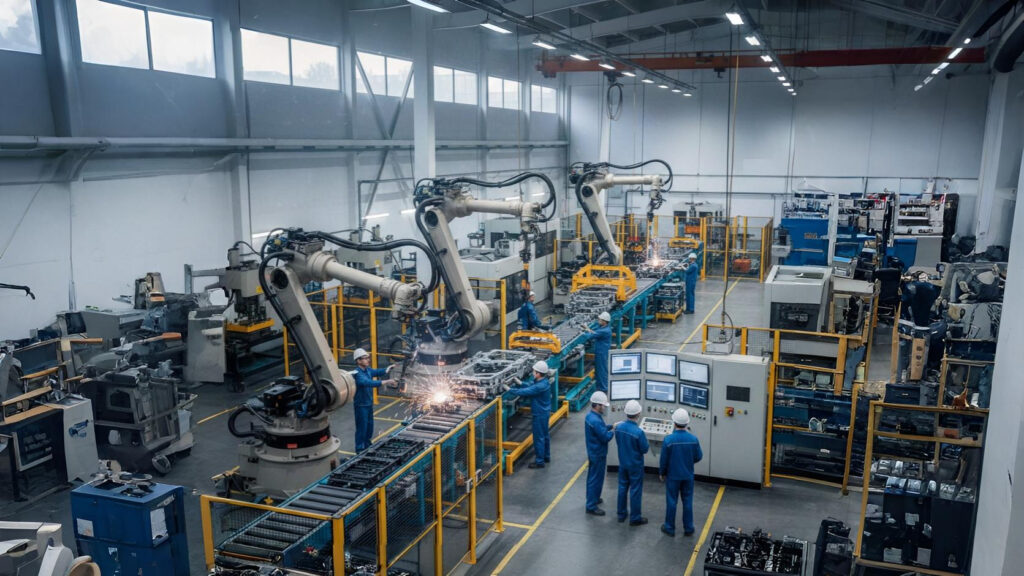
Robotics integration in manufacturing involves deploying industrial robots that are fully synchronized with production equipment, control systems, and safety mechanisms. These robots operate as part of an interconnected environment, integrated with PLCs, SCADA platforms, vision systems, and MES software to ensure smooth, reliable, and scalable manufacturing operations.
A skilled integrator ensures robotic automation solutions align with production goals, quality standards, and future expansion plans.
Key Applications of Robotics Integration
- Pick and place robots for high-speed and accurate material handling
- Robotic welding systems for consistent and repeatable welding quality
- Assembly automation for precision-based component handling
- Machine tending and automated loading/unloading
- Palletizing and depalletizing in packaging and logistics operations
Benefits of Robotics Integration in Manufacturing
- Increased productivity through continuous, fatigue-free operation
- Improved product quality with high repeatability and precision
- Enhanced workplace safety by minimizing human involvement in hazardous tasks
- Reduced operational costs through lower scrap, rework, and labor dependency
- Improved production stability and predictable output
ROI from Robotic Automation Solutions
he return on investment (ROI) from robotics integration in manufacturing is primarily driven by measurable improvements in operational efficiency, reduced unplanned downtime, and significantly better asset utilization across the production line. By automating repetitive, labor-intensive, and precision-critical tasks, manufacturers can maintain consistent production speeds and eliminate performance variability caused by manual processes.
Although robotics integration requires an initial capital investment, the long-term financial benefits far outweigh the upfront costs. Automated systems help reduce dependency on manual labor, lower overtime expenses, and minimize errors that lead to rework or scrap. Robots operate with consistent accuracy and reliability, ensuring stable product quality and reducing costly production losses caused by defects or process interruptions.
Over time, manufacturers also benefit from extended equipment life, improved production planning, and predictable output levels. When combined with proper maintenance and process optimization, robotics enables faster payback periods, improved profit margins, and sustainable long-term profitability, making it a strategic investment rather than a short-term expense.
An experienced industrial robot integrator in India plays a critical role in optimizing system design to maximize ROI.
Robotics as a Foundation for Smart Factories
When integrated with PLC, SCADA, vision systems, and real-time analytics, robotics enables adaptive manufacturing and data-driven decision-making. These connected systems form the backbone of smart factory solutions and support Industry 4.0 initiatives.
Industries Adopting Robotic Automation Solutions
- Automotive & Auto Components
- FMCG & Packaging
- Pharmaceuticals
- Electronics Manufacturing
- Heavy Engineering
- Warehousing & Logistics
Choosing the Right Industrial Robot Integrator in India
The success of robotics integration in manufacturing depends heavily on the integration partner’s technical expertise, system integration capabilities, and long-term support approach. Implementing industrial robots is not just about installing hardware; it requires a deep understanding of production processes, safety standards, control systems, and existing shop-floor infrastructure to ensure seamless and reliable operation.
A reliable industrial robot integrator in India focuses on developing customized automation strategies tailored to specific operational requirements rather than delivering generic, one-size-fits-all solutions. This includes process analysis, robot selection, layout planning, software integration, testing, and operator training. An experienced integrator also provides ongoing maintenance, performance optimization, and technical support to ensure the robotic systems continue to deliver consistent results over time.
By partnering with the right integration expert, manufacturers can reduce implementation risks, accelerate time-to-value, and achieve stable, scalable automation that supports long-term efficiency, productivity, and business growth.
Conclusion
Robotics integration in manufacturing is no longer limited to large enterprises—it is a strategic investment for manufacturers aiming to improve productivity, quality, safety, and competitiveness.
By deploying intelligent robotic automation solutions with the right integration partner, manufacturers can achieve sustainable ROI and build future-ready manufacturing operations.