
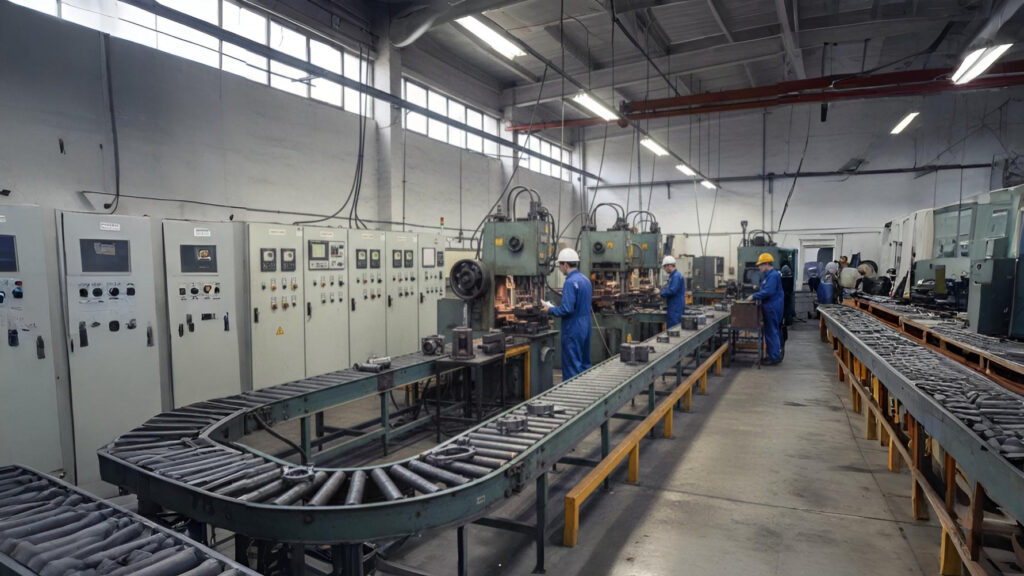
How Smart Factory Automation Reduces Production Downtime and Improves OEE
Is unexpected downtime killing your production line and impacting your delivery commitments? In today’s highly competitive manufacturing landscape, simply having the capacity to produce is no longer enough. The real driver of profitability is operational efficiency and consistency. Frequent machine breakdowns, unplanned stoppages, maintenance delays, and human errors can quickly derail production schedules, increase costs, and reduce overall output.
This is where Smart factory automation benefits become a true game-changer. By integrating automated machinery, PLC-based control systems, and real-time monitoring tools, manufacturers can build smarter, more reliable, and more resilient production environments. Automation minimizes manual intervention, standardizes processes, and ensures machines operate within optimal parameters—significantly reducing the risk of sudden failures.
By embracing intelligent factory automation, manufacturers can effectively reduce downtime in manufacturing, improve asset utilization, and gain better visibility into production performance. Automated systems enable faster fault detection, predictive maintenance, and consistent production flow, helping you extract maximum value from your equipment. The result is a measurable improvement in Overall Equipment Effectiveness (OEE), higher productivity, better product quality, and a more sustainable manufacturing operation.
What Exactly is Production Downtime?
Production downtime is any moment your machines or processes aren’t running at their best. It’s that frustrating halt in production that costs you time and money. The most common causes include:
-
- Machine breakdowns due to wear and tear or component failure
-
- Human error during manual operations
-
- Lack of real-time data visibility
-
- Slow maintenance response
-
- Poor communication between systems and teams
Without automation, these issues often go unnoticed until serious damage occurs. Smart automation solves these challenges at the root level.
How Factory Automation Benefits Reduce Downtime
1. Real-Time Monitoring: Your 24/7 Production Watchdog
One of the biggest advantages of factory automation is full operational visibility. Automated systems continuously monitor machine health, cycle times, and performance.
This helps you:
-
- Detect problems instantly
-
- Respond faster with accurate information
-
- Prevent minor issues from turning into major shutdowns
Real-time monitoring plays a critical role in reducing downtime in manufacturing.
2. Predictive Maintenance Automation: Fix Before Failure
Predictive maintenance uses real-time machine data to anticipate failures before they occur. Unlike reactive or calendar-based maintenance, this approach is data-driven.
Key benefits include:
-
- Fewer unexpected breakdowns
-
- Optimized maintenance schedules
-
- Longer equipment lifespan
-
- Reduced maintenance costs
Predictive maintenance automation is essential for improving uptime and reliability.
3. Automated Fault Detection and Alerts
Automation systems can detect small deviations in temperature, vibration, or speed and trigger alerts immediately.
This enables:
-
- Faster fault identification
-
- Reduced troubleshooting time
-
- Minimal production disruption
Automation removes guesswork and keeps production running smoothly.
Boosting OEE with Factory Automation
Overall Equipment Effectiveness (OEE) measures manufacturing efficiency based on availability, performance, and quality. Automation enhances all three.
Availability
-
- Reduced unplanned downtime
-
- Faster fault recovery
-
- Efficient maintenance processes
Performance
-
- Stable and optimized machine speeds
-
- Consistent cycle times
-
- Reduced micro-stoppages
Quality
-
- Automated quality inspections
-
- Error-proofing systems
-
- Lower scrap and rework rates
Together, these improvements significantly increase OEE and profitability.
Why Smart Factory Automation Is a Smart Investment
Automation is not just about replacing manual labor—it’s about long-term operational excellence.
Key advantages:
-
- Greater operational stability
-
- Accurate production planning
-
- Higher return on investment (ROI)
-
- Scalable systems for future growth
Automation is one of the most effective ways to reduce downtime in manufacturing while maintaining competitiveness.
Conclusion
Downtime and low Overall Equipment Effectiveness (OEE) are no longer unavoidable challenges for modern manufacturers. With the smart factory automation strategy, organizations can move from reactive operations to proactive, data-driven production environments. Automated systems help improve machine reliability, reduce human dependency, and ensure smoother, uninterrupted workflows across the production line.
By leveraging Smart factory automation benefits, predictive maintenance automation, and smart manufacturing solutions, manufacturers gain real-time visibility into equipment health and production performance. These technologies enable early fault detection, planned maintenance, and optimized machine usage—significantly reducing unplanned downtime. As a result, businesses can consistently boost OEE, improve equipment utilization, maintain high product quality, and build a scalable, future-ready production facility that can adapt to changing market demands.